
Guides
What is Liquid Staking? Lido, RocketPool, and more
•
by krendelyok.eth
Welcome, everyone! Today we’re going to discuss Liquid Staking, a more flexible alternative to regular crypto staking.
Disclaimer: The information provided below is not financial advice. Please always do your own research!
Let’s start by going over the basics of staking.
Staking is the process of temporarily locking your crypto assets.
While this is important for network decentralization, security and development, it also allows users to earn yields.
In part, this can be compared with a bank term deposit:
When you put your money (stake assets) on a bank term deposit (
a staking contract), the bank (the blockchain/protocol) begins to utilize your assets for institutional purposes.
For this, the bank (the blockchain/protocol) gives you a reward — interest on the money deposited.
But a traditional bank is a centralized institution, while most blockchains are decentralized. It means that the crypto assets you stake on a blockchain are used for the benefit of all blockchain users, and not just for a privileged minority. But how exactly are your assets used?
This is done through a consensus mechanism called Proof of Stake (PoS). PoS helps a blockchain process transactions and create new blocks. With PoS, crypto asset owners can validate (approve) block transactions based on the number of staked tokens. When you decide to start staking, your tokens get locked and become part of this validating process. The yields are generated through emissions of ETH, as well as fees from users interacting with a blockchain.
But it’s not as simple as you might think.
The big problem with regular staking is that a) a large number of tokens are required (for example, 32 ETH to become an Ethereum validator), and b) the tokens are locked and not available for trading and other operations.
Liquid Staking is a fast-growing DeFi product that offers a solution to these problems.
With liquid staking, you can simply stake any amount of your tokens to get staking rewards and receive special liquid tokens that represent the tokens you staked. These tokens, also known as Liquid Staking Derivatives (LSD tokens), can be traded or used as collateral elsewhere across the DeFi ecosystem.
Liquid Staking allows you to stake your tokens on blockchains while simultaneously staking them on a variety of DeFi protocols, increasing your returns and minimizing risks.
Sounds pretty interesting, doesn’t it? But how do you know which blockchains support liquid staking and which platforms you can stake on?
Don’t worry, we have a list of proven and popular protocols that allow you to enjoy all the benefits of liquid staking!
1. Lido Finance
Lido is a liquid staking solution for ETH backed by industry-leading staking providers. Lido lets users stake their ETH — without locking assets or maintaining infrastructure — whilst participating in on-chain activities, e.g. lending.
Lido attempts to solve the problems associated with initial ETH staking: illiquidity, immovability and accessibility, making staked ETH liquid and allowing for participation with any amount of ETH to improve performance of the Ethereum network.
You can learn more here.
Supported Networks
When staking with Lido, users receive stETH tokens which are issued 1:1 to their initial stake. stETH balances can be used like regular ETH to earn and lend rewards, and are updated on a daily basis to reflect your ETH staking rewards, minus any penalties. There are no lock-ups or minimum deposits when staking with Lido.
When using Lido, users receive staking rewards in real time. They can also use staked tokens across the DeFi ecosystem to compound rewards.
How do I start using Lido?
Below, I’ll show you the basics for interacting with Lido. I will be using Ethereum, but you can choose any available network and repeat the steps below.
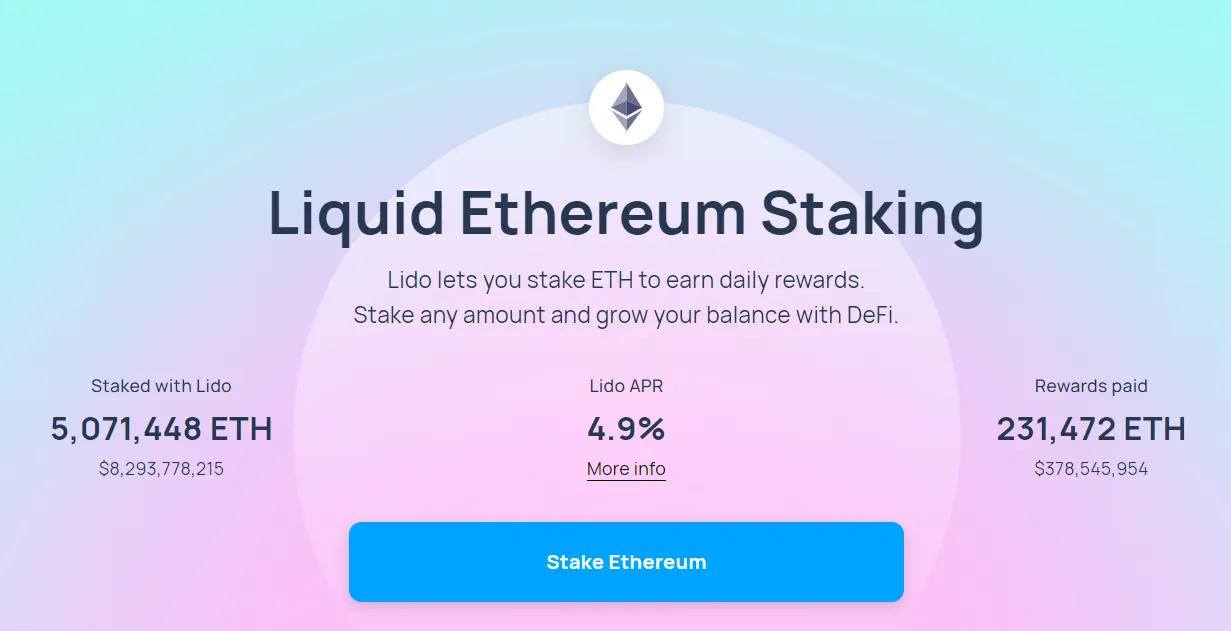
1. Follow the link and click on ‘Stake Ethereum’.
2. You will be redirected to a staking page where you will need to connect your web3 wallet. Make sure you have a web3 wallet installed and deposited with ETH, then click on ‘Connect Wallet’ in the top right corner and choose a wallet you’d like to use (I’m using MetaMask).
3. Enter the amount of ETH you’re going to stake and click on ‘Submit’.
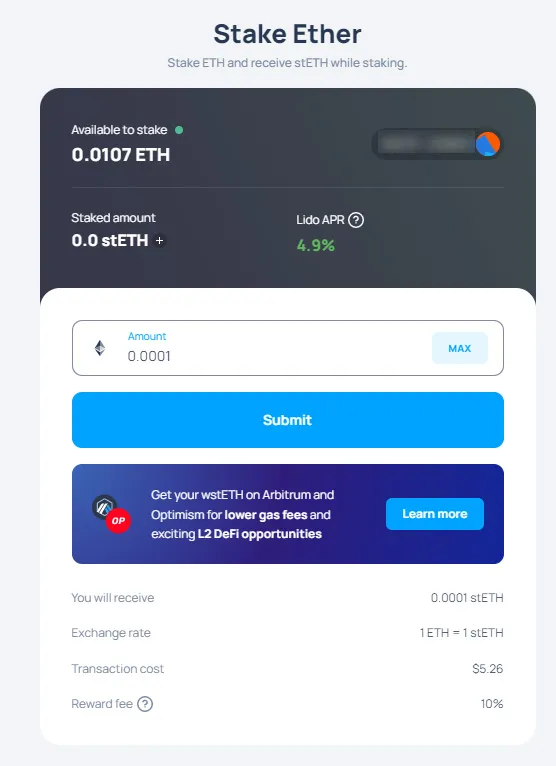
💡 Layer3 Tip: It’s better to stake your assets when the network isn’t busy and the gas fee is low. You can use https://ethgasstation.info/ to check the current gas fee on Ethereum mainnet.
4. Confirm the transaction in your wallet.
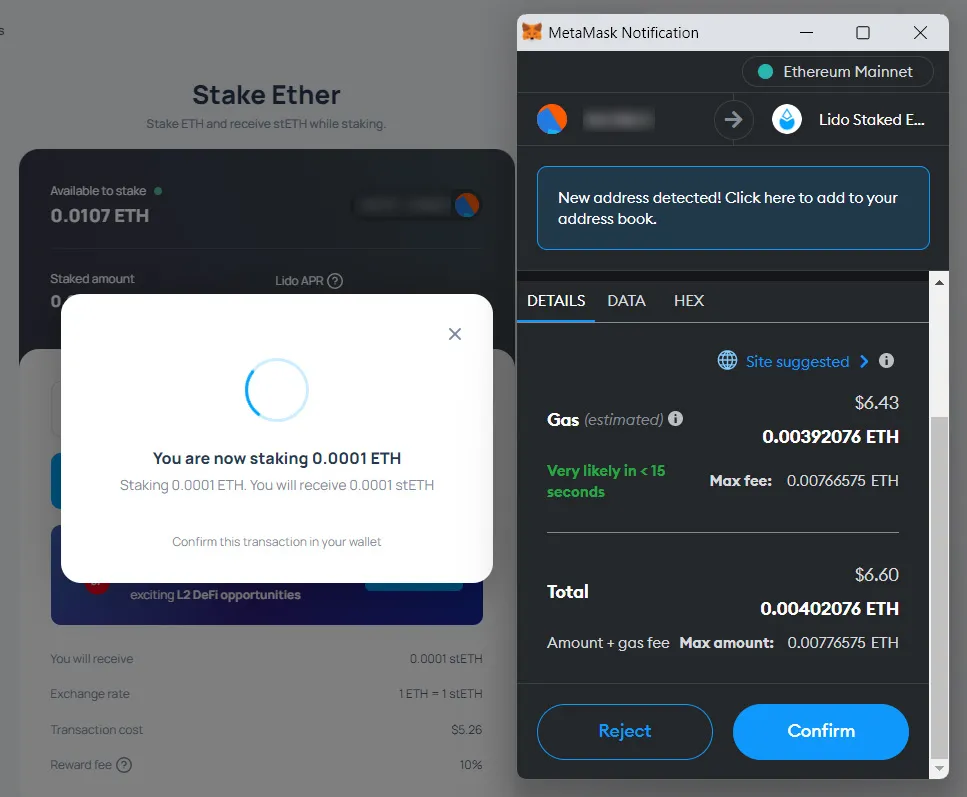
💡Layer3 Tip: Even though you can stake a very small amount (as in this guide), I recommend choosing an amount that makes sense to get a return on.
5. Add received stETH tokens to get displayed on MetaMask.
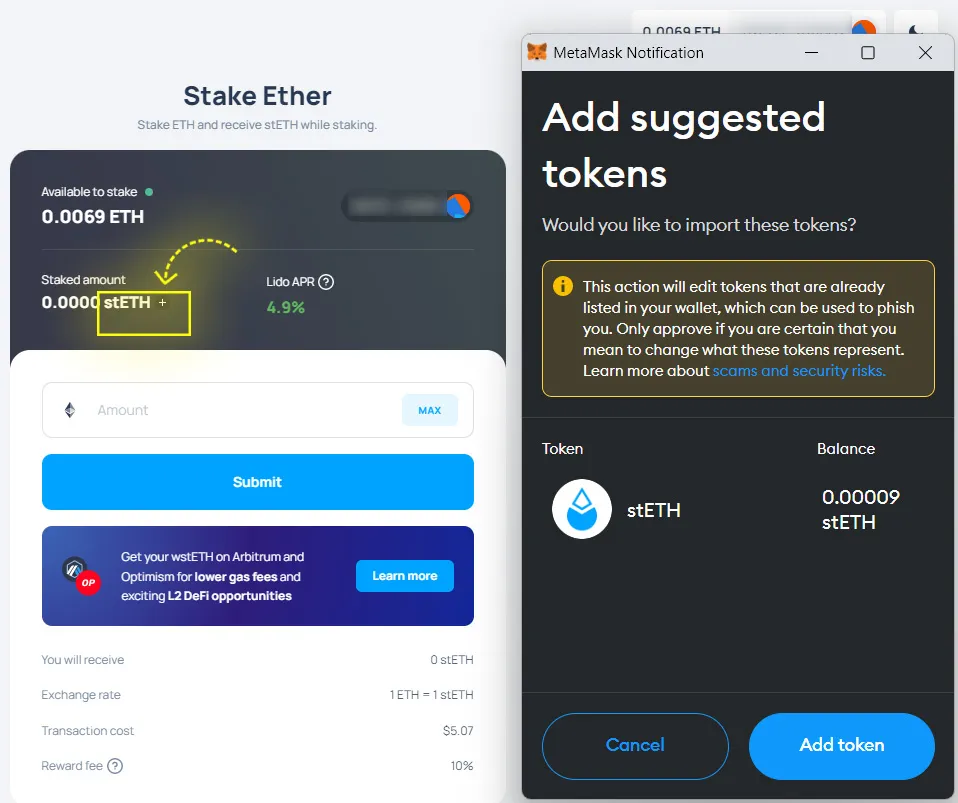
Good job! Now you have some LSD tokens (in that case, these LSD tokens are called stETH).
stETH is a token that represents staked ether in Lido, combining the value of initial deposit + staking rewards. stETH tokens are minted upon deposit and burned when redeemed. stETH token balances are issued 1:1 to the ethers that are staked by Lido. stETH token’s balances are updated when the oracle reports change in total stake every day.
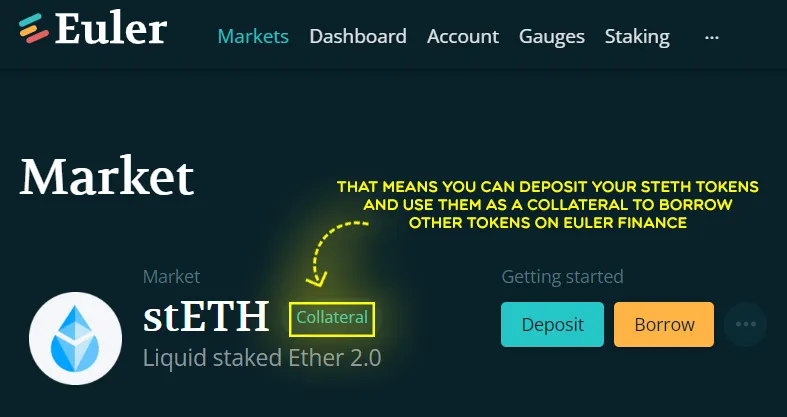
You can now stake your stETH and use it as collateral across lots of DeFi platforms, such as Ribbon Finance, Euler Finance, Nexus Mutual and others. It’s as simple as using your ETH or stablecoins as collateral.
Here’s an example with Euler Finance:
💡 Layer3 Tip: wstETH holders may unwrap their wstETH to stETH, and stETH holders may exchange their stETH back to ETH on liquidity pools such as Curve or Balancer.
2. RocketPool
Rocket Pool is a first of its kind ETH2 Proof of Stake Protocol, designed to be community owned, decentralised, trustless and compatible with staking in Ethereum 2.0. It was first conceived in late 2016 and has since had over 5 successful public betas over the life span of ETH2 development.
Supported Networks
Ethereum
As a Rocket Pool staker, your role is to deposit ETH into the deposit pool which will enable a node operator to create a new Beacon Chain validator.
You can stake as little as0.01 ETH.
In doing so, you will be given a token called rETH.
rETH represents both how much ETH you deposited, and when you deposited it.
How do I start using RocketPool?
There are two ways to get an rETH token: 1) by using the RocketPool platform, and 2) by buying an rETH token on Uniswap or Balancer.
Instructions for depositing ETH into RocketPool
Follow the link here to get redirected to the staking page.
Make sure your web3 wallet is on Ethereum Mainnet, then connect it to RocketPool (click on a wallet icon in the top right corner).
Choose at least 0.01 ETH to stake and receive your rETH tokens, then click on ‘Stake’.
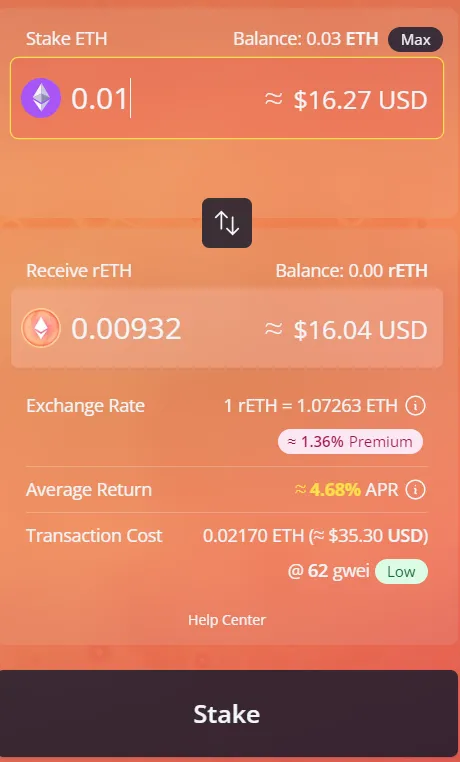
💡Layer3 Tip: It’s better to stake your assets when the network isn’t busy and the gas fee is low. You can use https://ethgasstation.info/ to check the current gas fee on Ethereum mainnet.
Now you can accrue yield from having your ETH staked, and you can also utilize your rETH in DeFi protocols like Euler and Uniswap!
Looking to try liquid staking in a safe and guided way? Try our latest Quest!
Want to supercharge your web3 experience? Discover this Quest and many more on Layer3.
Layer3 is empowering the next generation of web3 users as the best place to learn, explore, and succeed in web3. Take custody of your assets and learn the essential skills for a decentralized future through our guided crypto courses. We take users through exciting new web3 products via interactive on-chain experiences and educational Quests, and have helped over 40+ customers take 200k+ users through 10M+ on-chain actions.
To continue your web3 journey, find Layer3 on Twitter, Discord, or Telegram.